
Rejuran
Showing all 4 results
REJURAN Regenerative Healers: The Ultimate Guide to PN Polynucleotide Cellular Skin Rejuvenation
In the modern landscape of advanced aesthetic medicine, the focus of anti-aging treatments has shifted from temporary volume replacement to active cellular regeneration. Traditional hyaluronic acid skin boosters provide immediate surface hydration, but they do not alter the underlying biological decline of the aging dermis. Over time, chronic sun exposure, environmental pollution, and natural chronological aging damage skin cell DNA, slow down fibroblast production, and deplete the natural extracellular matrix, leading to thin, fragile skin, fine wrinkles, and loss of elasticity.
To address these signs of aging at a deep molecular level, South Korean biopharmaceutical leader PharmaResearch Products engineered REJURAN. Holding extensive regulatory approvals globally, Rejuran is a premium injectable line powered by highly purified Polynucleotides (PN) extracted from wild salmon DNA. By utilizing a patented purification process known as DOT Technology, Rejuran delivers biocompatible DNA fragments directly into the dermis. These fragments repair damaged cellular networks, activate dormant fibroblasts, and restore the biological health of the skin tissue from within, making it a pioneer in regenerative aesthetics.
For high-end medical spas, dermatology clinics, and international aesthetic distributors looking to satisfy a growing demand for natural, non-filler skin repair, maintaining a consistent stock of the Rejuran range is a vital commercial strategy. Below, we break down the molecular polymer science of salmon-derived PN, explore the clinical indicators for each product variant, contrast its performance with other biostimulators, and detail the guidelines for bulk wholesale sourcing.
The Core Science: DNA Fragments and DOT Manufacturing Technology
The distinct clinical success and high biocompatibility of Rejuran rely on a precise chemical extraction process that isolates long-chain DNA fragments from salmon reproductive cells:
-
Salmon DNA Biocompatibility: Salmon DNA possesses an exceptionally close base-pair composition to human DNA. This structural similarity ensures that the purified material integrates seamlessly into human tissue without triggering systemic immune responses, foreign-body granulomas, or late-onset allergic reactions.
-
Patented DOT Technology (DNA Optimizing Technology): PharmaResearch utilizes this proprietary purification method to strip away all non-nucleic cellular proteins, lipids, and potential allergens. This process isolates pure, high molecular weight Polynucleotide (PN) chains, ensuring maximum stability, clinical safety, and predictable tissue regeneration.
-
Intracellular Signaling and Receptor Activation: Once delivered into the mid-dermis, the PN chains bind to specific cell receptors, triggering an intracellular cascade. This process signals dormant fibroblasts to enter an active metabolic phase, accelerating the production of fresh, native Type I and Type III collagen, elastin, and endogenous hyaluronic acid.
-
The Salvage Pathway Efficiency: As the polynucleotide polymer chains slowly break down over time, they supply the skin cells with a ready pool of free purines and pyrimidines. Local cells absorb these fragments via the metabolic salvage pathway, saving cellular energy and speeding up native DNA repair, cellular division, and tissue recovery.
-
Complete Antioxidant Defense: The molecular structure of polynucleotides functions as a powerful radical scavenger. It traps reactive oxygen species (ROS) induced by UV rays and fine urban pollution, shielding delicate cellular membranes and structural fibers from ongoing oxidative stress.
The Rejuran Product Portfolio: Target Calibration
The Rejuran family is divided into four distinct variations, each featuring a specific polynucleotide concentration and viscosity profile tailored to match the skin thickness of different anatomical zones.
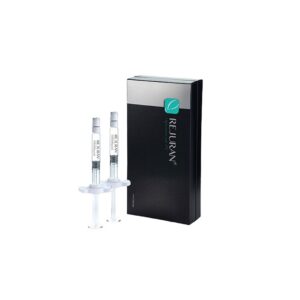
1. Rejuran Healer (Classic / Standard)
-
Biochemical Profile: Features a balanced 2.0 percent concentration of highly purified polynucleotides (20 mg/mL) delivered in a 2.0 mL pre-filled syringe. Formulated without hyaluronic acid or lidocaine.
-
Primary Clinical Indications: Engineered to treat widespread facial photo-aging, correct superficial fine creases, improve deep acne scars, minimize enlarged pores, and restore overall thickness to thinning skin.
-
Target Areas: Full face rejuvenation, superficial cheeks, forehead, neck creases, and the decollete region.
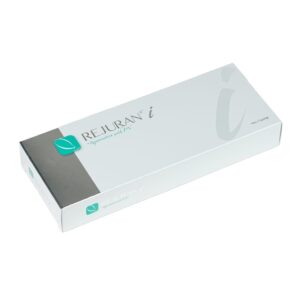
2. Rejuran I (Rejuran Eye)
-
Biochemical Profile: A lightweight, low-viscosity formulation calibrated at a fluid polynucleotide concentration, delivered in a 1.0 mL pre-filled syringe to ensure smooth delivery through ultra-fine needles.
-
Primary Clinical Indications: Specifically engineered for the delicate, hyper-fragile tissue of the periocular zone. It treats hollow tear troughs, fine crow feet lines, thinning under-eye skin, and vascular dark circles without causing local fluid retention or chronic swelling.
-
Target Areas: Upper and lower eyelids, periorbital margins, and sensitive temporary hollows beneath the eyes.
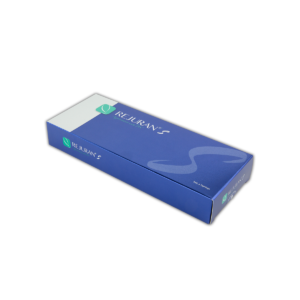
3. Rejuran S (Rejuran Scar)
-
Biochemical Profile: The densest, highest-viscosity formulation within the injectable portfolio, possessing a concentrated polynucleotide matrix delivered in a 1.0 mL pre-filled syringe.
-
Primary Clinical Indications: Developed specifically to treat deep atrophic depressions, depressed acne scars, chickenpox scars, and localized fibrotic skin defects. The high viscosity ensures the product stays localized beneath the scar floor to support rapid tissue rebuilding.
-
Target Areas: Targeted atrophic acne scars, localized deep facial depressions, and targeted surgical scar matrices.
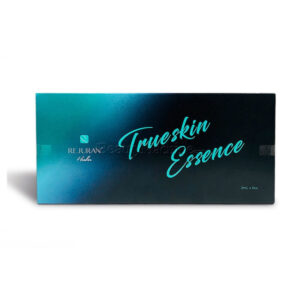
4. Rejuran HB (Hydro Booster)
-
Biochemical Profile: A patented, dual-action hybrid formula combining 1.0 percent highly purified Polynucleotides with 1.0 percent uncross-linked Hyaluronic Acid and 0.3 percent lidocaine, delivered in a 1.0 mL syringe.
-
Primary Clinical Indications: Designed for mature, dehydrated skin requiring immediate mechanical moisture along with long-term cellular repair. The integrated lidocaine ensures excellent patient comfort throughout the injection process.
-
Target Areas: Dehydrated facial zones, fine superficial wrinkles, and early photo-damaged tissues.
Clinical Placement Protocols and Injection Methodologies
To safely achieve uniform cellular activation, Rejuran must be delivered precisely into the superficial to mid-dermal layer using targeted clinical techniques.
-
The Micro-Papular Mesotherapy Technique: Primarily utilized for Rejuran Healer and Rejuran I. Utilizing an ultra-fine 33G or 34G needle (4 mm length), small intradermal papules (0.02 mL to 0.05 mL per point) are placed uniformly across the targeted field, spaced approximately 0.5 cm apart. This method provides a steady, localized release of PN directly to the fibroblast layers.
-
Linear Subcision Injection: Primarily used for Rejuran S when treating deep atrophic acne scars. The practitioner introduces a sharp needle beneath the scar tissue floor, performs a light subcision movement to release bound fibrotic bands, and deposits a small droplet of the dense gel directly into the hollow pocket to jumpstart localized tissue reconstruction.
-
Cannula Retrograde Delivery: For broad, uniform coverage without surface bruising, practitioners frequently use a blunt 27G or 30G cannula in the subdermal plane, delivering the product via a fanning technique.
-
Recommended Treatment Cycles: Because biological tissue remodeling operates on a cumulative biological timeline, a single session is not sufficient. The standard clinical protocol demands 3 to 4 initial treatments spaced 3 to 4 weeks apart, followed by a single maintenance treatment every 6 months to maintain optimal fibroblast activity.
Technical Comparison: Rejuran vs. Market Competitors
To assist procurement managers, clinic directors, and medical buyers in organizing a well-balanced regenerative catalog, it is useful to examine how Rejuran compares with other market-leading biostimulators and tissue-remodeling systems like Plinest, Profhilo, and Sculptra.
| Technical Parameter | REJURAN (PharmaResearch) | Plinest (Mastelli) | Profhilo (IBSA) | Sculptra (Galderma) |
| Active Substance | Polynucleotides (PN) (Salmon DNA fragments) | PN-HPT (Purified trout DNA fragments) | High and Low Molecular Weight Hybrid HA | Poly-L-Lactic Acid (PLLA) Microparticles |
| Primary Action | Non-inflammatory cell receptor activation | Cellular repair and salvage pathway support | Mechanical tissue bio-remodeling via HA diffusion | Controlled local sub-clinical inflammatory response |
| Immediate Volume | Low to None (Focuses on skin quality) | Low to None (Focuses on skin quality) | Intermediate (Provides a sweeping hydro-lift) | High initial, followed by slow volume building |
| Fish/Marine Allergy | Yes (Strictly avoided in fish allergy profiles) | Yes (Derived from piscine trout sources) | No (Pure fermentation-derived uncross-linked HA) | No (Synthetic biocompatible polymer matrix) |
| Downtime Profile | 24 to 48 hours (Visible papules fade slowly) | 24 to 48 hours (Visible papules fade slowly) | Low (12 to 24 hours across 10 BAP points) | Minimal surface downtime (Deep swelling) |
Key Takeaways for Clinical Positioning:
-
Rejuran vs. Profhilo: Profhilo utilizes high concentrations of pure, hybrid hyaluronic acid to rapidly spread moisture across broad tissue layers, creating an intermediate hydro-lifting effect that settles within a day. However, it does not contain nucleotide molecules to directly target cellular DNA repair or treat deep atrophic acne scars. Rejuran provides less immediate structural volume but delivers superior long-term cellular repair and tissue thickening, making it highly effective for fragile, damaged, or scar-prone skin.
-
Rejuran vs. Sculptra: Sculptra relies on PLLA microparticles to cause a progressive, deep inflammatory response that builds significant structural volume over several months, making it excellent for hollow jawlines and sagging cheeks. However, it cannot be safely injected into the superficial dermis, forehead, or upper eyelids. Rejuran operates via a completely non-inflammatory pathway, offering an exceptionally safe, versatile tool for superficial fine lines, thin under-eye skin, and direct dermal scar restoration.
Wholesale Sourcing and Inventory Management for Clinical Success
Because a full Rejuran skin-healing protocol requires a multi-syringe regimen spaced over several weeks, busy medical practices experience a very rapid inventory turnover of the entire product range.
Sourcing the Rejuran portfolio in volume through verified B2B e-commerce platforms provides clinics with substantial tier pricing discounts. Minimizing your initial acquisition cost-per-syringe gives your practice the financial agility to bundle competitive multi-session packages, create comprehensive face-and-eye renewal protocols, and protect your practice baseline profit margins.
When managing high-end aesthetic inventory online, strict logistics and storage parameters must be enforced. Pure polynucleotide chains are sensitive to extreme temperature shifts. To preserve the structure of the viscoelastic gel and ensure a smooth, uniform extrusion force during treatment, inventory must be stored in a cool, dry place, ideally at room temperature between 1 degree and 30 degrees Celsius, away from direct sunlight, high humidity, or freezing conditions. Sourcing managers should purchase exclusively from verified wholesale distributors who guarantee authentic original manufacturing from PharmaResearch, unadulterated batch tracking numbers, intact sterile tamper seals, and temperature-controlled shipping logistics.
Frequently Asked Questions (FAQs)
1. Is Rejuran a traditional dermal filler?
No. Rejuran does not contain cross-linked hyaluronic acid and is not designed to create immediate artificial volume, plumping, or alter natural facial features. It is a regenerative biostimulator. It works over time at a cellular level, encouraging the body to repair its own damaged skin layers and produce fresh collagen and elastin to naturally thicken and firm the skin from within.
2. Can Rejuran be injected into patients with a seafood allergy?
No. Because the active polynucleotide chains are derived and purified from a salmon source, Rejuran is strictly contraindicated for individuals with a known systemic allergy to fish, shellfish, or marine products. For these specific patient profiles, alternative non-marine biostimulators or pure fermentation-derived hyaluronic acid skin boosters should be used instead.
3. How quickly will patients see visible results from a Rejuran treatment?
Initial changes—such as a boost in surface hydration, improved skin softness, and a brighter complexion—are often visible within the first 7 to 10 days following the first session. However, because deep structural tissue remodeling relies on a progressive biological timeline, the most significant improvements in skin thickness, scar reduction, elasticity, and fine line smoothing develop over 2 to 4 weeks after the second and third sessions.
4. What is the expected post-treatment downtime for patients?
When utilizing the classic micro-papular mesotherapy technique, patients will develop small, visible bumps at the injection sites. These papules are a normal part of the process and typically resolve within 24 to 48 hours as the viscoelastic gel absorbs into the surrounding dermis. If a cannula is used, surface downtime is almost invisible, though minor pinpoint bruising may occasionally occur around fragile capillaries.
5. Can Rejuran be safely combined with Botulinum Toxin or Dermal Fillers?
Yes, it pairs exceptionally well with other cosmetic treatments. While Botulinum Toxin relaxes underlying muscles to soften dynamic expression lines and dermal fillers restore lost volume in deep structural areas, Rejuran repairs the biological quality of the skin tissue itself. Medical practitioners generally recommend waiting 2 weeks between treatments to allow the tissue to fully settle.
6. What are the absolute clinical contraindications for Rejuran?
Rejuran must never be administered to pregnant or breastfeeding women, individuals with active localized skin infections, active herpes simplex outbreaks, or open wounds in the targeted zone, or anyone with a known fish allergy. It is also completely contraindicated for individuals managing active systemic autoimmune disorders, unstable diabetes, or those undergoing current oncological therapies.
