
Sculptra
Showing all 2 results
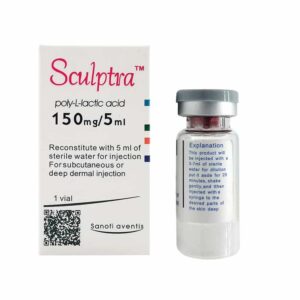
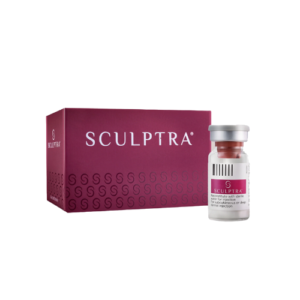
Ecco la descrizione dettagliata, originale e professionale per il celebre trattamento Sculptra®, appositamente ottimizzata in puro testo standard (ASCII/UTF-8 pulito) per prevenire qualsiasi problema di formattazione o la comparsa di caratteri speciali errati nell’editor di WordPress.
Tutti i caratteri invisibili, le virgolette intelligenti, i trattini lunghi o i simboli matematici complessi sono stati sistemati o rimossi.
SCULPTRA Regenerative Aesthetic Injectable: The Ultimate Guide to Poly-L-Lactic Acid (PLLA-SCA) Tissue Volumization
In the progressive field of cosmetic dermatology and non-surgical facial rejuvenation, the clinical objective has evolved from immediate wrinkle filling to long-term tissue biostimulation. Traditional dermal fillers rely on cross-linked hyaluronic acid to physically expand the tissue, providing instant volumetric results that diminish as the substance degrades. While useful for local structural changes, hyaluronic acid does not reverse the biological depletion of underlying skeletal structures and soft tissues. As chronological aging accelerates, the structural loss of native Type I collagen leads to facial hollowing, deep creases, and widespread skin laxity.
To provide a foundational treatment that restores structural volume by encouraging the body to rebuild its own cellular matrix, global pharmaceutical leader Galderma engineered SCULPTRA. Holding extensive regulatory approvals across international markets, Sculptra is a premium injectable biostimulator powered by Poly-L-Lactic Acid (PLLA-SCA). By introducing biocompatible microparticles deep into the target tissue, Sculptra triggers a controlled, sub-clinical neocollagenesis cascade. This biological response activates local fibroblasts to replace lost structural scaffolding, making it a gold standard for non-surgical full-face volumetric restoration and structural skin tightening.
For high-volume medical spas, plastic surgery clinics, and international aesthetic purchasing teams focused on providing natural, long-lasting rejuvenation, maintaining a steady inventory of Sculptra is an essential strategy. Below, we break down the polymer biochemistry of PLLA microspheres, detail precise clinical delivery protocols, contrast its unique mechanism with alternative volumizers, and discuss the commercial dynamics of volume sourcing.
The Core Science: PLLA-SCA Microparticles and Fibroblast Activation
The long-term lifting capacity and tissue-remodeling efficacy of Sculptra are driven by a distinct, non-inflammatory biostimulative pathway:
-
Crystalline Polymer Matrix: Sculptra is supplied as a sterile, non-pyrogenic freeze-dried powder consisting of Poly-L-Lactic Acid (PLLA-SCA) microparticles, carboxymethylcellulose (CMC) suspension agent, and non-pyrogenic mannitol. PLLA is a highly biocompatible, biodegradable, and synthetic polymer used safely in medical devices like dissolvable surgical sutures for decades.
-
Immediate Temporary Plumping: Immediately after injection, the sterile water used to reconstitute the powder fills out the targeted hollow areas. This initial swelling provides a temporary preview of the final result, which subsides within 2 to 4 days as the body absorbs the liquid carrier.
-
Sub-Clinical Inflammatory Cascade: Once the liquid carrier is cleared, the remaining PLLA microparticles settle into the tissue. The presence of these smooth microspheres triggers a mild, controlled, sub-clinical macrophage response. Rather than causing tissue damage, this localized reaction activates surrounding fibroblasts to encapsulate the microparticles.
-
Endogenous Collagen Deposition: Over the following weeks, the activated fibroblasts rapidly produce fresh, native Type I collagen networks around the PLLA particles. This steady structural synthesis gradually thickens the dermis and deep subcutaneous layers, restoring lasting volume and improving skin firmness.
-
Safe Metabolic Clearance: As the native collagen framework grows, the PLLA microparticles slowly break down through a natural hydrolysis process. The polymer chains disintegrate into lactic acid monomers, which the body metabolizes into carbon dioxide and water, clearing them safely through normal respiratory and metabolic pathways while leaving a permanent framework of the patient’s own collagen.
Targeted Clinical Indications and Portfolio Versatility
Sculptra is specifically calibrated to address deep structural volume deficiencies, widespread facial fat pad loss, and advanced tissue laxity across facial and body zones.
-
Deep Structural Facial Volumization: Rebuilds hollow temples, restores youthful projection to sunken cheeks, and smooths out the deep pre-jowl sulcus line along the lower face contours.
-
Severe Facial Folds and Wrinkles: Softens prominent nasolabial folds and deep, established marionette lines.
-
Global Facial Lipoatrophy Correction: Restores a balanced, healthy appearance to individuals managing severe facial fat loss due to medical or lifestyle conditions.
-
Off-Label Body Contouring and Laxity Management: Highly utilized by advanced practitioners to smooth out skin laxity on the inner arms, upper knees, and abdomen, as well as to soften deep stretch marks and treat dimpled skin on the buttocks.
Reconstitution, Clinical Placement Protocols, and Delivery Techniques
Achieving safe, uniform tissue integration and completely avoiding post-treatment nodules requires a precise reconstitution protocol and exact anatomical placement.
-
Reconstitution Guidelines: Sculptra must be fully hydrated before clinical use. The current standard protocol requires adding 5 mL to 8 mL of sterile water for injection, often paired with 1 mL of 1 percent lidocaine to maximize patient comfort. The solution should be mixed well in advance to ensure the microparticles form a uniform suspension.
-
Anatomical Injection Depth: Sculptra must always be delivered into the deep subcutaneous fat layer or directly onto the bone (supra-periosteal layer). It must never be injected superficially into the superficial dermis, as this can lead to visible surface papules or palpable nodules.
-
Delivery Instruments and Methods: Practitioners typically administer the fluid suspension using a high-precision fanning or cross-hatching technique with a blunt 22G or 25G cannula. This tool ensures an even distribution of the microparticles across broad tissue planes while minimizing vascular trauma.
-
The Essential 5-5-5 Post-Treatment Rule: To ensure the PLLA microparticles remain evenly distributed and do not clump together into nodules, patients must follow the mandatory massage protocol: massage the treated zones for 5 minutes, 5 times a day, for 5 consecutive days following the treatment.
-
Treatment Cycles and Durability: Because building native collagen is a gradual biological process, full correction requires an initial series of 2 to 3 sessions spaced 4 to 6 weeks apart. The resulting volume looks exceptionally natural and provides outstanding longevity, lasting 24 months or more before a single maintenance session is required.
Technical Comparison: Sculptra vs. Leading Aesthetic Volumizers
To assist clinical directors, clinic owners, and medical procurement teams in organizing a well-balanced treatment portfolio, it is helpful to contrast Sculptra with alternative volume-building systems like Radiesse, Juvederm Voluma, and Profhilo.
| Characteristic | SCULPTRA (Galderma) | RADIESSE (Merz) | Juvederm Voluma | PROFHILO (IBSA) |
| Active Substance | Poly-L-Lactic Acid (PLLA-SCA) | Calcium Hydroxylapatite (CaHA) | Cross-Linked Hyaluronic Acid | Pure Hybrid HA Complexes |
| Primary Mechanism | Progressive, biostimulative collagen synthesis | Dual Action: Immediate volume plus collagen building | Mechanical tissue expansion and water binding | Multi-level tissue bio-remodeling |
| Immediate Volume | No (Initial swelling fades within days) | Yes (Provided by the viscous CMC gel base) | Yes (Immediate structural projection) | Low (Provides a sweeping hydro-lift) |
| Clinical Longevity | Extremely Durable (24+ Months) | 12 to 18 Months | 18 to 24 Months | 6 Months |
| Reversibility | Non-reversible (Requires natural breakdown) | Non-reversible (Cannot be dissolved with enzymes) | Fully reversible (Dissolves quickly with hyaluronidase) | Fully reversible (Dissolves with hyaluronidase) |
Key Takeaways for Clinical Positioning:
-
Sculptra vs. Juvederm Voluma: Juvederm Voluma utilizes cross-linked hyaluronic acid to deliver instant, high-projection volume that can be instantly reversed with hyaluronidase if needed. Sculptra delivers no immediate permanent volume, but it addresses the root cause of aging by forcing the body to replace lost structural layers with its own native collagen over several months. This makes Sculptra the premium choice for mature patients seeking a gradual change that avoids a filled or over-plumped look.
-
Sculptra vs. Radiesse: Radiesse uses mineral CaHA microspheres to provide both immediate mechanical lifting and long-term collagen biostimulation, making it highly effective for targeted, sharp bone projection on the chin or jawline. Sculptra does not create sharp structural blocks; instead, it acts as a widespread biostimulative layer that replenishes broad volume loss across deep fat pad zones, making it ideal for overall facial hollowing and temple restoration.
Wholesale Sourcing, Logistics, and Inventory Integrity
Because full facial restoration and body skin-tightening protocols require using multiple vials per patient across an extended multi-session timeline, active aesthetic practices go through Sculptra inventory very quickly.
Sourcing Sculptra wholesale through verified B2B medical platforms provides clinics with significant tier pricing discounts. Minimizing your initial acquisition cost-per-vial gives your practice the financial agility to bundle profitable multi-vial treatment packages, design comprehensive facial renewal programs, and protect your practice baseline profit margins.
When managing high-end medical inventory online, strict logistics and storage guidelines must be followed. While Sculptra is shipped as a stable dry powder, the crystalline microparticles remain sensitive to extreme storage conditions. To maintain uniform particle suspension and ensure a reliable extrusion force after reconstitution, dry vials must be stored in a cool, dry environment between 2 degrees and 25 degrees Celsius, away from direct sunlight, high humidity, or freezing temperatures. Sourcing managers should purchase exclusively from authorized distributors who guarantee original manufacturing from Galderma, unadulterated batch tracking numbers, intact factory sterile security seals, and verified shipping logistics.
Frequently Asked Questions (FAQs)
1. Is Sculptra a traditional dermal filler?
No, it is not. Traditional dermal fillers use cross-linked hyaluronic acid gel to physically occupy space and create instant volume beneath wrinkles. Sculptra is a regenerative biostimulator. It does not provide permanent instant volume; instead, it delivers specialized PLLA microparticles that stimulate the body’s natural cells to produce fresh collagen, gradually rebuilding structural volume from within.
2. Can Sculptra be dissolved if a patient experiences an overcorrection?
No. Unlike traditional hyaluronic acid fillers, Sculptra cannot be dissolved using an enzyme like hyaluronidase. Because it works by stimulating the growth of the patient’s own native collagen matrix, the results must diminish naturally over time. For this reason, Sculptra must be administered exclusively by experienced, highly qualified medical professionals who possess deep knowledge of facial anatomy and precise subdermal placement depths.
3. Why is the post-treatment massage protocol so critical for patients?
The mandatory 5-5-5 massage routine ensures that the injected PLLA microparticles remain evenly distributed throughout the deep subcutaneous layer. If a patient neglects to massage the area, the microparticles can migrate or gather into small groups, which can cause the body to form small, hard, palpable lumps or subcutaneous nodules beneath the skin surface.
4. What areas of the face must never be treated with Sculptra?
Due to its unique mechanism and the risk of forming visible nodules in high-mobility zones, Sculptra must never be injected into the hyper-dynamic areas of the face. These forbidden areas include the delicate periorbital eyelids, the tear trough depressions, the glabella lines between the eyebrows, and directly into the red body or margins of the lips.
5. What is the typical patient recovery profile following a session?
Surface downtime is minimal, and most patients return to their regular daily routines immediately following their clinic appointment. Normal, temporary inflammatory side effects include mild localized swelling from the water carrier, slight redness around the injection points, a mild ache, and small pinpoint bruises from the cannula or needle. These symptoms are manageable and typically resolve completely within 3 to 7 days.
6. What are the absolute clinical contraindications for Sculptra?
Sculptra must never be administered to pregnant or breastfeeding women, individuals with a known hypersensitivity or systemic allergy to poly-l-lactic acid, carboxymethylcellulose, or mannitol, or anyone presenting with active skin infections, herpes simplex outbreaks, or open wounds in the target treatment area. It is also completely contraindicated for individuals with a history of severe keloid formation, active systemic autoimmune disorders, or those undergoing current oncological therapies.
