
Restylane
Showing all 2 results
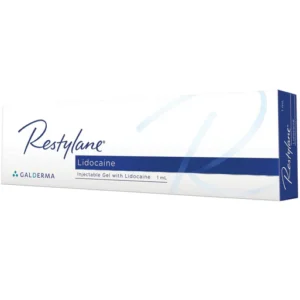
RESTYLANE Premium Dermal Fillers: The Ultimate Guide to NASHA and OBT Hyaluronic Acid Technologies
In the global market of minimally invasive aesthetic medicine, Restylane stands as one of the most established, trusted, and scientifically documented dermal filler brands in the world. Developed by Q-Med in Sweden and distributed by Galderma, Restylane revolutionized the industry by becoming the first non-animal stabilized hyaluronic acid (NASHA) filler to receive FDA approval. Since its launch, the brand has continuously evolved, introducing highly refined cross-linking technologies to provide medical professionals with precise control over facial volumization, structural contouring, and superficial skin hydration.
Unlike generic filler lines that apply a single manufacturing method to all products, the Restylane ecosystem utilizes two distinct, patented design technologies: NASHA and OBT (Optimal Balance Technology, also known as XpresHAn Technology). This dual-approach allows practitioners to choose between firm, high-lifting gels for structural bone projection and flexible, dynamic gels that move naturally with facial expressions, ensuring optimal, customized results across all anatomical zones.
For high-volume medical spas, plastic surgery clinics, and international aesthetic distributors, stocking the complete Restylane portfolio is essential for meeting patient demand. Below, we break down the polymer science behind NASHA and OBT, examine the target indications for each product variant, compare its performance with other dominant global brands, and detail inventory management guidelines for clinic profitability.
The Core Polymer Science: NASHA vs. OBT Technologies
The performance, tissue integration, and durability of the Restylane line depend on the specific cross-linking technology used to structure the hyaluronic acid molecules:
-
NASHA Technology (Non-Animal Stabilized Hyaluronic Acid): This historic manufacturing method creates a firm, particulate gel matrix. By applying a low degree of chemical cross-linking (under 1 percent) and passing the gel through specific sizing sieves, NASHA technology yields high G-Prime fillers with sharp, clean edges. In practice, these gels do not spread or diffuse into surrounding tissues; they stay exactly where injected, providing maximum structural lifting capacity and strong resistance to muscular compression.
-
OBT / XpresHAn Technology (Optimal Balance Technology): Designed for high-mobility zones, this technology varies the cross-linking degrees of the hyaluronic acid chains to create a smooth, continuous, and highly flexible monophasic-like gel network. OBT fillers offer excellent stretchability and high cohesivity. This allows the gel to integrate into dynamic tissue planes, bending and stretching seamlessly when the patient smiles, speaks, or moves their face, completely eliminating the risk of a stiff or frozen appearance.
The Restylane Product Portfolio: Target Calibration
The Restylane family features a diverse range of formulations, categorized by their structural technology, gel density, and target injection depths.
1. The NASHA Range (Firm Structural Support)
-
Restylane (Classic): A medium-particle, high-lifting gel designed for mid-dermal placement. It is the original standard for treating moderate facial wrinkles, defining the vermilion border of the lips, and filling early tear trough depressions. Supplied in a 1.0 mL pre-filled syringe, available with or without lidocaine.
-
Restylane Lyft (Formerly Perlane): A dense, large-particle gel with an exceptionally high G-Prime. Formulated with lidocaine and delivered in a 1.0 mL syringe, it is designed for deep subcutaneous or pre-periosteal placement. It serves as the gold standard for jawline contouring, chin projection, malar cheek volume replenishment, and dorsal hand rejuvenation.
2. The OBT / XpresHAn Range (Dynamic Flexibility)
-
Restylane Refyne: A soft, highly flexible gel with a high stretch profile. Designed for mid-to-deep dermal injection, it is optimized to smooth out moderate dynamic lines, such as superficial nasolabial folds and marionette lines, while maintaining complete facial mobility. Delivered in a 1.0 mL syringe.
-
Restylane Defyne: A firmer OBT variant that balances intermediate lifting support with high flexibility. Placed in the deep dermis or upper subcutaneous fat, it is engineered to correct deep, established facial folds while allowing natural movement in active areas. Supplied in a 1.1 mL syringe.
-
Restylane Kysse: Specifically engineered for lip architecture, this OBT gel integrates smoothly into the delicate labial mucosa. It provides long-lasting volume plumping, crisp border definition, and a soft, natural feel, ensuring lips move beautifully when speaking or smiling. Delivered in a 1.0 mL syringe.
-
Restylane Volyme: A high-cohesivity gel tailored to restore lost volume across broad facial planes. Placed in the deep subcutaneous layers, it creates soft, rounded contours in hollow cheeks and temples without creating firm edges. Supplied in a 1.0 mL syringe.
3. The Skin Booster Range (Hydration Reconstitution)
-
Restylane Vital / Vital Light: Light, uncross-linked or minimally cross-linked micro-gels designed for widespread mesotherapy injections into the superficial dermis. They act as a steady reservoir of deep hydration, improving overall skin elasticity, tone, and surface radiance across the face, neck, decollete, and hands. Delivered in a 1.0 mL or 2.0 mL pen injector format.
Technical Comparison: Restylane vs. Market Leaders
To assist clinic directors, purchasing managers, and medical buyers in structuring a well-balanced filler portfolio, it is helpful to analyze how Restylane compares with other market-leading filler systems like Juvederm, Revolax, and Radiesse.
| Technical Parameter | RESTYLANE Range (Galderma) | Juvederm (Allergan) | REVOLAX (Across) | RADIESSE (Merz) |
| Active Substance Base | Hyaluronic Acid (Dual NASHA / OBT Matrix) | Hyaluronic Acid (Vycross / Hylacross Matrix) | Hyaluronic Acid (Monophasic Cohesive) | Calcium Hydroxylapatite (CaHA Microspheres) |
| Gel Consistency | Particulate (NASHA) or Flexible Sheet (OBT) | Smooth, continuous monophasic gel | Uniform, highly cohesive monophasic gel | Thick mineral suspension in a CMC carrier gel |
| Lifting Profile | Extremely High (NASHA) to Flexible (OBT) | Intermediate to High (Smooth expansion) | High (Strong G-Prime retention) | Very High (Immediate mechanical bone lift) |
| Tissue Diffusion | Low (Stays exactly where placed) | Moderate (Smooth interstitial flow) | Low to Moderate (Clean integration) | Minimal (Requires deep localized placement) |
| Reversibility | Fully reversible via hyaluronidase | Fully reversible via hyaluronidase | Fully reversible via hyaluronidase | Non-reversible (Requires natural breakdown) |
Key Clinical Sourcing Takeaways:
-
Restylane vs. Juvederm: Juvederm products are primarily smooth, monophasic gels that flow easily into tissue layers, providing soft, sweeping volume expansion. Restylane provides a more targeted approach. Its NASHA gels provide a crisper, firmer lift on the bone that resists muscle compression better than Juvederm, while its OBT range matches Juvederm for smoothness but offers superior dynamic stretch for highly mobile zones like the lips and mouth.
-
Restylane vs. Radiesse: Radiesse uses mineral CaHA microspheres to trigger long-term collagen production and build durable deep volume, but it cannot be dissolved with an enzyme if a complication arises. Restylane Lyft offers a comparable firm, structural lift directly on the bone but remains completely reversible with hyaluronidase, providing a safer option for clinics prioritizing patient safety and forgiving correction.
Wholesale Sourcing, Storage, and Logistics Integrity
Because full facial contouring and structural anti-aging treatments frequently require using multiple syringes per patient session (such as combining deep cheek lifting with flexible peri-oral smoothing), high-volume cosmetic practices consume filler stock very quickly.
Sourcing the Restylane portfolio in volume through verified B2B e-commerce channels provides clinics with significant tier pricing discounts. Minimizing your initial acquisition cost-per-syringe gives your practice the financial agility to handle flexible promotional offers, design seasonal packages, and protect your baseline profit margins.
When managing high-end aesthetic inventory online, strict logistics and storage parameters must be enforced. True Restylane contains precisely cross-linked polymer chains that are highly sensitive to extreme temperature shifts. To prevent the gel from separating and to ensure a smooth, uniform extrusion force during treatment, inventory must be stored at room temperature, ideally between 2 degrees and 25 degrees Celsius, away from direct sunlight, moisture, or freezing conditions. Sourcing managers should purchase exclusively from verified wholesale distributors who guarantee authentic original manufacturing from Galderma, unadulterated batch tracking numbers, intact sterile tamper seals, and reliable shipping logistics.
Frequently Asked Questions (FAQs)
1. What is the difference between Restylane Classic and Restylane Kysse?
Restylane Classic uses NASHA technology, which creates a firm, particulate gel matrix ideal for providing defined structural lift along the lip borders or correcting moderate skin wrinkles. Restylane Kysse uses OBT technology, creating a highly flexible, cohesive gel sheet that integrates seamlessly into the moving body of the lips. This ensures the lips look plumped, natural, and feel soft when speaking, smiling, or kissing.
2. How long do the visible results of a Restylane treatment last?
The longevity depends entirely on the specific product formulation used and the metabolic rate of the patient. On average, dynamic OBT fillers like Refyne and Kysse maintain their aesthetic correction for 9 to 12 months. Standard Restylane Classic lasts 10 to 12 months, while the dense, structural Restylane Lyft can maintain jawline or cheek projection for up to 12 to 18 months.
3. Can Restylane fillers be dissolved if correction is required?
Yes, absolutely. Because the entire Restylane range is composed of pure hyaluronic acid without any permanent synthetic additives, it is 100 percent reversible. If a patient experiences asymmetry, overcorrection, visible surface lumps, or an accidental vascular complication, the gel can be dissolved quickly and completely by injecting a professional hyaluronidase enzyme directly into the treated pocket.
4. What is the typical patient recovery profile after a session?
Downtime is minimal, allowing most patients to return to work and light daily activities immediately following their appointment. Normal, temporary inflammatory side effects—such as localized swelling, mild redness, a firm sensation around the injection sites, and light pinpoint bruising—are expected reactions to the needle or cannula and typically clear completely within 2 to 7 days post-procedure.
5. Why is a high G-Prime beneficial for jawline and chin filling?
A high G-Prime means the gel possesses superior elasticity and firmness, allowing it to act as an artificial implant. Fillers with a high G-Prime, such as Restylane Lyft, do not flatten out or spread into surrounding soft tissues when subjected to the continuous pressure of facial muscles. This allows the product to provide sharp, crisp bone projection, creating a clean jawline and distinct chin definition.
6. What are the absolute clinical contraindications for Restylane?
Restylane must never be administered to pregnant or breastfeeding women, individuals with a known hypersensitivity or systemic allergy to hyaluronic acid or lidocaine, or patients presenting with active skin infections, herpes simplex outbreaks, or open wounds in the target treatment area. It is also completely contraindicated for individuals managing active systemic autoimmune disorders, bleeding conditions, or those taking heavy immunosuppressive medications.
