
Meso-Wharton
Showing the single result
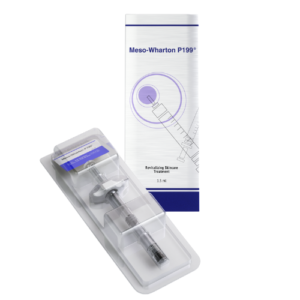
MESO-WHARTON P199® Cellular Renewal Bioremediator: The Ultimate Guide to Wharton’s Jelly Peptide Stem Cell Therapy
In the advanced sector of anti-aging medicine and corrective dermatology, the clinical objective has evolved from simple tissue hydration to true, deep cellular reprogramming. While traditional mesotherapy cocktails supply the skin with basic vitamins and uncrosslinked hyaluronic acid, they rely entirely on the existing, often depleted capacity of aging cells to heal themselves. As chronological aging and photo-damage progress, the population of active dermal stem cells drops significantly. This deceleration in cellular turnover leads to irreversible dermal thinning, a sharp loss of elasticity, deep structural wrinkles, and delayed wound recovery.
To overcome the limits of traditional skin boosters, the American biotechnology laboratory ABG Lab (in collaboration with leading European researchers) engineered Meso-Wharton P199®. Holding full international regulatory approval and widely recognized as a premier clinical bioremediator, Meso-Wharton introduces a patented, bio-synthetic analog of embryonic peptides. This unique formulation targets the proliferation and differentiation of localized dermal stem cells, actively forcing the skin to regenerate its structural foundation from within.
For high-end aesthetic medicine centers, anti-aging clinics, and global aesthetic distributors seeking a scientifically backed treatment for mature skin restructuring, maintaining a consistent stock of Meso-Wharton P199 is an essential commercial move. Below, we break down the advanced biochemistry of the P199 peptide matrix, map out its target clinical applications, compare it with other leading skin-boosters, and outline the benefits of bulk wholesale sourcing.
The Science of Meso-Wharton P199®: Stem Cell Receptor Activation
The core innovation that distinguishes Meso-Wharton P199 from standard mesotherapy solutions is its unique, targeted cellular signaling mechanism. The formula centers on a proprietary, bio-engineered peptide complex:
-
Wharton’s Jelly Peptide (Wharton’s Jelly Peptide P199): This patented synthetic peptide is an exact analog of the signaling molecules found in Wharton’s Jelly—the embryonic connective tissue of the umbilical cord. P199 binds directly to specific membrane receptors on quiescent (dormant) dermal stem cells. This interaction triggers rapid cellular division, generating a fresh, active population of young fibroblasts.
-
Endogenous Fibroblast Transformation: These newly mobilized fibroblasts migrate into the surrounding dermal matrix, where they actively synthesize fresh, native Type I and Type III collagen, elastic fibers, and natural glycosaminoglycans, restoring youthful skin thickness and density.
-
High-Molecular-Weight Uncrosslinked Hyaluronic Acid ($1.5\%$): The peptide matrix is suspended in an ultra-pure, non-crosslinked hyaluronic acid carrier. This base instantly floods the extracellular matrix with moisture, establishing the ideal environment for the newly activated fibroblasts to function and move.
-
The Bioremodeling Multi-Complex: Beyond the P199 peptide, Meso-Wharton is infused with an extensive cocktail of growth factors (EGF, bFGF, IGF), regulatory peptides, amino acids, vitamins, and nucleic acid bases. This comprehensive blend fuels cellular metabolism, neutralizes free radicals, and reverses signs of advanced photo-aging.
Targeted Clinical Indications and Patient Profiles
Meso-Wharton P199 is supplied as a sterile, ready-to-use $1.5\text{ mL}$ syringe, specifically indicated for age categories from 40 to 45+ years, or for skin profiles showing advanced structural degradation.
-
Advanced Chronological Aging Correction: Rebuilds thin, fragile skin, lifting deep wrinkles, structural folds, and smoothing out micro-laxity along the lower face and jawline.
-
Severe Photo-Damage Reversal: Corrects solar elastosis, rough skin texture, and patchy, irregular hyperpigmentation caused by chronic UV exposure.
-
Pre- and Post-Surgical Conditioning: Prepares facial tissues for invasive plastic surgeries (such as deep-plane facelifts or blepharoplasties) and accelerates healing, minimizing post-op scarring.
-
Ablative Laser Therapy Optimization: Speeds up cellular recovery following aggressive CO2 laser skin resurfacing or deep chemical peels, reducing patient downtime and preventing post-inflammatory hyperpigmentation (PIH).
Clinical Placement Protocols and Injection Techniques
To ensure optimal cellular signaling and even product distribution, Meso-Wharton P199 must be delivered precisely into the mid-to-deep dermal layer using systematic injection techniques.
-
The Micro-Papular Infiltration Technique: Utilizing a fine 32G or 33G needle, the practitioner places small papules of the solution across the entire facial and neck matrix.
-
Linear Retrograde Cannula Technique: For treating structural shadows or fragile areas like the neck and décolleté, a fine cannula can be used to weave a thin, supportive network of the solution across the subdermal plane.
-
The Standard Regenerative Course: Because stem cell mobilization operates on a cumulative biological timeline, maximum clinical outcomes require a structured protocol. A standard course consists of 4 to 6 initial sessions spaced 10 to 14 days apart, followed by a maintenance program of 1 session every 2 to 3 months.
Competitive Brand Analysis: Meso-Wharton P199 vs. The Competition
To help purchasing managers, aesthetic distributors, and clinic owners select the ideal cellular rejuvenation treatment for mature skin profiles, it is vital to contrast Meso-Wharton P199 with other prominent skin boosters like Profhilo®, NCTF® 135HA, and Meso-Xanthin F199®.
| Brand | Primary Active Matrix | Primary Mechanism of Action | Target Age Demographics | Recommended Protocol Structure |
| MESO-WHARTON P199® | Wharton’s Jelly Peptide P199 + HA + Multi-Growth Factors. | Direct stimulation and division of localized dermal stem cells. | Mature Profiles (40+ Years) showing distinct signs of structural aging. | 4 to 6 sessions, spaced 10 to 14 days apart. |
| Profhilo® | High & Low Molecular Weight Hybrid HA Complexes. | Mechanical tissue bio-remodeling via slow HA dispersion. | All age categories showing mild-to-moderate skin laxity. | 2 primary sessions, spaced 30 days apart. |
| Filorga NCTF® 135HA | Uncrosslinked HA + 59 Revitalizing Ingredients. | Nutritional replenishment of existing, mature fibroblasts. | Younger Profiles (25–35 Years) seeking preventative radiance. | 3 to 5 sessions, spaced 2 to 4 weeks apart. |
| Meso-Xanthin F199® | Fucoxanthin F199 + HA + Peptides + Vitamins. | Cellular DNA repair, anti-inflammatory defense, and clearing. | Younger to Middle Age (25–40 Years) dealing with acne, PIH, or early aging. | 3 to 5 sessions, spaced 7 to 14 days apart. |
Key Takeaways for the Practitioner:
-
Meso-Wharton P199 vs. Profhilo: Profhilo is an exceptional treatment for addressing overall skin laxity via high-dose hybrid hyaluronic acid hydration, but it does not contain cellular signaling peptides. Meso-Wharton P199 focuses heavily on biology, deploying the P199 peptide to actively increase the number of working fibroblasts, making it a more effective choice for treating thin, severely wrinkled, and depleted skin profiles.
-
Meso-Wharton P199 vs. NCTF 135HA: NCTF 135HA acts as a superb nutritional supplement, feeding existing skin cells to optimize radiance and glow in early aging. Meso-Wharton P199 is far more potent for mature skin; instead of merely nourishing old cells, it prompts the generation of new cells, delivering the deep structural remodeling that mature skin requires.
Wholesale Sourcing and Bulk Ordering for Anti-Aging Medical Centers
Because achieving deep, long-lasting cellular regeneration requires a structured multi-session protocol, single standalone syringes are rarely enough to satisfy clinical goals. Busy anti-aging clinics and cosmetic dermatology networks experience a fast turnover of these premium bioremediators.
Purchasing Meso-Wharton P199 wholesale through specialized e-commerce medical portals provides clinic owners with substantial volume discounts. Minimizing your initial cost-per-syringe gives your practice the financial flexibility to bundle highly profitable multi-session treatment packages. This approach helps secure a steady patient flow over a multi-week protocol while maximizing the clinic’s return on investment.
When sourcing Meso-Wharton online, strict quality control and logistical standards must be enforced. True Meso-Wharton P199 utilizes highly sensitive, bio-engineered peptide matrices and complex growth factor chains that must be stored in a cool, dark environment—ideally refrigerated between 2°C and 8°C—to prevent protein denaturation. Medical professionals must purchase exclusively through authorized, licensed aesthetic distributors who guarantee authentic original boxes from ABG Lab, unadulterated batch tracking numbers, pristine vacuum packaging seals, and climate-controlled logistics.
Frequently Asked Questions (FAQs)
1. Is Meso-Wharton P199 a traditional wrinkle filler?
No, it is not. Meso-Wharton P199 does not contain chemically crosslinked hyaluronic acid designed to create artificial mechanical volume or shape contours. It is a cellular bioremediator and stem-cell stimulator. It works over time by instructing the skin to naturally produce its own fresh collagen and elastin fibers, increasing skin thickness and smoothing wrinkles from the inside out.
2. Does Meso-Wharton P199 contain human embryonic stem cells?
No, absolutely not. Meso-Wharton P199 contains zero human tissues, cellular extracts, or embryonic components. The Wharton’s Jelly Peptide P199 is a completely synthetic, highly purified, bio-engineered polypeptide chain produced in a sterile laboratory environment. It safely mirrors the positive signaling properties of embryonic peptides without any of the risks or ethical concerns associated with human biological tissue.
3. How quickly can a patient see visible improvements from a session?
Initial surface improvements, such as deeper skin hydration, enhanced brightness, and a rested facial appearance, typically emerge within 3 to 5 days post-injection as the hyaluronic acid base integrates into the tissue. The deeper structural changes—including increased skin firmness, improved elasticity, and a visible reduction in wrinkle depth—develop progressively over 4 to 6 weeks as the new fibroblast generations actively synthesize a fresh dermal matrix.
4. What is the typical patient downtime following a Meso-Wharton treatment?
Downtime is minimal and easily managed. Because the solution is delivered via the micro-papular technique, patients will experience small, raised bumps at the injection sites. These papules are completely normal and resolve within 24 to 48 hours as the gel smoothly absorbs into the surrounding dermis. Light redness or occasional pinpoint bruising around delicate zones usually fades completely within a few days.
5. Why is Meso-Wharton recommended specifically for patients over 40?
While it can be used on younger patients to treat severe scar tissue or extreme environmental damage, Meso-Wharton is specifically optimized for patients over 40. Around this age, the skin’s natural population of active dermal stem cells drops significantly, leading to accelerated thinning and deep wrinkles. Meso-Wharton targets this specific age-related decline, providing the cellular signals necessary to reactivate mature skin’s natural regenerative processes.
6. What are the absolute contraindications for Meso-Wharton P199 bioremediation?
Meso-Wharton P199 must never be administered to pregnant or breastfeeding women, individuals with a known hypersensitivity or allergy to hyaluronic acid or any of the vitamins and peptides within the matrix, or patients with active skin infections, herpes outbreaks, or open wounds in the target area. It is also completely contraindicated for individuals managing active systemic oncology treatments or unstable auto-immune medical conditions.
