
Lipo Lab
Showing the single result
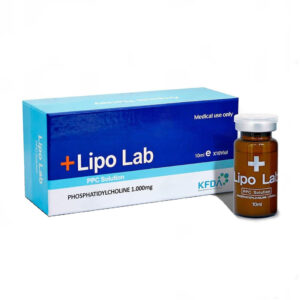
LIPO LAB® Premium Lipolytic System: The Ultimate Guide to PPC/Deoxycholate Body Contouring and Adipose Dissolution
In the competitive landscape of non-surgical aesthetics and body contouring, target-specific lipolysis has become a foundational service for modern clinics worldwide. While surgical liposuction remains an option for general fat reduction, patients increasingly demand minimally invasive alternatives that deliver precise anatomical sculpting without general anesthesia, surgical incisions, or extensive post-operative downtime.
To bridge the gap between aggressive surgical intervention and slow-acting topical fat treatments, South Korean biotechnology pioneer CSBIO engineered Lipo Lab® (and its advanced successor, Lipo Lab+®). Widely recognized as one of the most reliable, cost-effective, and high-volume lipolytic treatments on the global aesthetic market, Lipo Lab utilizes a high-purity, synergistic combination of Phosphatidylcholine (PPC) and Sodium Deoxycholate. Together, these medical-grade compounds initiate a predictable, dual-action biochemical cascade that breaks down localized subcutaneous fat deposits and converts them into a fluid emulsion that the body expels naturally.
For aesthetic clinics, medical spas, and aesthetic wholesale distributors managing high patient turnover, Lipo Lab represents an indispensable commercial asset. Below, we examine the scientific formulation of Lipo Lab, outline its precise clinical implementation across diverse target zones, contrast its performance with other dominant lipolytic brands, and detail the clear financial advantages of bulk commercial sourcing.
The Science of Lipo Lab®: The Phosphatidylcholine & Deoxycholate Synergy
The clinical efficacy of Lipo Lab relies on a time-tested, twin-component chemical matrix. Unlike older mesotherapy compounds that often used unpurified, variable raw ingredients, Lipo Lab is manufactured in state-of-the-art South Korean facilities using a high-purity ($99.8\%$) raw material specification, significantly improving safety and product stability.
-
Sodium Deoxycholate (Deoxycholic Acid Salt): This component serves as the initial catalyst for the fat-dissolving process. When introduced directly into the subcutaneous layer, Sodium Deoxycholate acts as a localized detergent. It alters the surface tension and breaks down the structural integrity of the adipocyte (fat cell) phospholipid bilayer. This process, known as adipocytolysis, causes the fat cells to open and release their inner lipid contents.
-
Phosphatidylcholine (PPC): Extracted from high-purity plant lipids, PPC acts as a natural emulsifier. Once the deoxycholate ruptures the fat cell wall, the stored hydrophobic triglycerides spill out into the intercellular matrix. PPC immediately binds to these free lipids, breaking them down into a highly fluid, water-soluble compound.
-
Accelerated Lymphatic Clearing: Once emulsified by the PPC, the liquid fat can be processed easily by the body’s natural defense systems. Macrophages migrate to the treatment zone to clear cellular debris, while the lymphatic system moves the emulsified lipids to the liver, where they undergo beta-oxidation and are naturally excreted.
Target Treatment Zones and Clinical Application Mapping
Lipo Lab is formulated as a sterile, ready-to-use solution packaged in 10 mL vials, providing ample volume to treat both smaller facial imperfections and broad, dense body contours.
Lower Face and Mandibular Sculpting
-
Submental Lipodystrophy (Double Chin): Minimizes the localized fat pocket under the chin to sharpen the jawline.
-
Pre-Jowl Sulcus Refinement: Targets sagging lower cheek fat bags to restore a clean, youthful facial contour.
Broad-Scale Body Contouring
-
Abdominal Squaring & Flanks (Love Handles): Melts away stubborn superficial fat layers across the upper and lower abdomen and lower back.
-
Axillary & Bra Fat Accumulations: Eliminates the uncomfortable fat rolls that bulge near the armpit and brassiere lines.
-
Triceps Refinement (Upper Arms): Sculpts the posterior aspect of the upper arms, resolving localized tissue laxity caused by fat deposits.
-
Trochanteric (Saddlebags) and Inner Thigh Contouring: Slates down the outer hips and inner thighs for a smoother, more proportional lower body shape.
Clinical Protocol, Infiltration Mechanics, and Depth Calibration
Achieving uniform fat reduction and preventing superficial skin irregularities requires precise technical delivery into the subcutaneous fat matrix.
-
Depth of Injection: The solution must never be introduced superficially into the dermal layers (which causes skin necrosis) or deeply into muscle tissue. Practitioners generally inject at a depth of 4 mm to 6 mm for submental fat pads and 10 mm to 13 mm for deep abdominal sections.
-
The Clinical Infiltration Grid: The chosen treatment area is systematically mapped using a 1 cm times 1 cm or 1.5 cm times 1.5 cm square grid. Small aliquots of the solution 0.2 mL to 0.4 mL per grid vertex) are injected perpendicularly into the fat padding.
-
The Session Matrix: A standard Lipo Lab transformation protocol consists of a primary series of 3 to 5 sessions, with an interval of 3 to 4 weeks between treatments. This timeline provides the body with the necessary time to metabolize the released lipids and allow localized inflammatory swelling to fully subside.
Competitive Brand Analysis: Lipo Lab vs. The Competition
To aid buying teams, purchasing agents, and medical directors in organizing a balanced and highly profitable clinical menu, it is essential to analyze how Lipo Lab compares with other market-leading fat dissolvers, such as Kybella®, Kabelline®, and LEMONBOTTLE®.
| Brand | Primary Active Matrix | Mechanism of Action | Post-Op Swelling & Discomfort Profile | Standard Protocol Intervals | Best Practice Application |
| LIPO LAB® | 99.8% Pure PPC + Sodium Deoxycholate. | Direct cell membrane destruction followed by lipid emulsification. | Moderate to High (Triggers temporary localized heat, redness, and swelling). | 3 to 5 sessions, spaced 3 to 4 weeks apart. | High-volume body sections, large abdominal pads, and cost-conscious clinics. |
| Kybella® | Premium-dose Deoxycholic Acid | Intense, high-scale chemical cell membrane lysis. | Severe (Triggers significant edema and soreness lasting 10–14 days). | 2 to 4 sessions, spaced 4 to 6 weeks apart. | Premium submental treatments with high brand overhead. |
| Kabelline® | Purified Deoxycholic Acid (DCA). | Controlled membrane lysis + rapid osmotic clearing. | Mild to Moderate (Optimized formula limits severe post-injection swelling). | 3 to 6 sessions, spaced 1 week apart. | Precision facial contouring, fast-turnaround jawline adjustments. |
| LEMONBOTTLE® | Riboflavin (B2) + Bromelain + Lecithin. | Accelerated natural fat metabolism and natural enzymatic breakdown. | Virtually Zero (Avoids chemical inflammation entirely). | 3 to 5 sessions, spaced 7 to 10 days apart. | Patients demanding zero social downtime and fast session turnarounds. |
Key Takeaways for the Practitioner:
-
Lipo Lab vs. Kybella: Kybella is a concentrated deoxycholic acid option designed for submental use, but its high cost and intense post-injection swelling can make broad body treatments impractical. Lipo Lab offers an excellent, cost-effective alternative for larger body areas, providing ample volume to comfortably treat broad abdominal and thigh regions.
-
Lipo Lab vs. Lemonbottle: Lemonbottle relies on non-inflammatory botanical enzymes to achieve swift, swelling-free fat thinning, making it popular for immediate social recovery. Lipo Lab, using the classic PPC/Deoxycholate matrix, triggers a more traditional inflammatory response. While it involves a standard recovery period, it remains a highly reliable choice for dense, fibrous fat deposits that require robust lipid emulsification.
Wholesale Sourcing, Storage Stability, and Commercial ROI
Because permanent body sculpting requires a cumulative sequence of treatments over several months, a single box is rarely enough to complete a full patient journey. Large-scale aesthetic centers and medical spas face rapid inventory turnover, making bulk commercial procurement essential.
Purchasing Lipo Lab wholesale from verified e-commerce medical portals provides clinic owners with substantial volume discounts. By minimizing the acquisition cost-per-vial, medical practices can offer competitive multi-session treatment packages. This commercial approach helps capture market share, increases patient retention over a multi-month protocol, and maximizes the clinic’s overall return on investment.
When sourcing Lipo Lab online, strict logistics and quality parameters must be followed. Authentic Lipo Lab features raw materials refined to a $99.8\%$ purity level, sealed in sterile glass vials. To maintain chemical stability and prevent the premature breakdown of the active proteins, the product must be stored in a cool, dark environment away from direct sunlight. Medical buyers must purchase through licensed aesthetic supply distributors who verify genuine South Korean production, unadulterated batch tracking codes, and intact tamper-resistant packaging seals.
Frequently Asked Questions (FAQs)
1. Is Lipo Lab intended for total body weight loss?
No. Lipo Lab is strictly a localized body-contouring and spot-fat reduction treatment. It is specifically engineered to target and eliminate diet-resistant pockets of subcutaneous adipose tissue (such as lower abdominal rolls, love handles, back fat, or double chins). It is not an alternative to bariatric treatments, gastric adjustments, or traditional lifestyle-driven weight-loss programs.
2. Are the fat-reduction results achieved via Lipo Lab permanent?
Yes, the results are permanent. Once the sodium deoxycholate and PPC matrix destroys the targeted adipocyte membranes, those specific fat cells undergo adipocytolysis and are naturally eliminated by the body. They cannot return or regenerate. However, if a patient experiences significant systemic weight gain in the future, the remaining fat cells in surrounding areas can expand, potentially altering the overall body contour.
3. What should a patient expect regarding post-treatment recovery and swelling?
Because Lipo Lab triggers a reliable, controlled chemical breakdown of fat cells, a temporary localized inflammatory response is completely normal. Immediately after treatment, patients will experience mild to moderate swelling, redness, firmness, and a localized warming sensation in the treated fat pad. Minor bruising from the injection points may also occur. Most of this swelling resolves within 3 to 7 days, and patients can return to light daily tasks immediately.
4. How many sessions are required, and when do visible changes appear?
A standard clinical protocol requires 3 to 5 sessions, spaced 3 to 4 weeks apart. While initial internal tissue changes occur within the first week, visible body contouring typically emerges after the second or third treatment session. The body requires sufficient time to break down, emulsify, transport, and excrete the released lipids through the lymphatic system. Peak sculpting results manifest approximately 4 weeks after the final session.
5. What are the essential post-care guidelines for patients?
To maximize the effectiveness of the treatment, patients should drink at least 1.5 to 2 liters of water daily for the first week after their session. This abundant hydration keeps the lymphatic system flushed, helping to carry away the emulsified fatty acids efficiently. Patients should also avoid saunas, hot tubs, heavy cardiovascular exercise, and alcohol for 48 hours post-injection to minimize additional swelling or bruising.
6. What are the absolute contraindications for a Lipo Lab treatment?
Lipo Lab must never be administered to pregnant or breastfeeding women, individuals with known allergies or hypersensitivities to soy or plant-derived phospholipids, or patients presenting with active skin infections, open wounds, or dermatitis in the targeted zone. It is also completely contraindicated for individuals managing severe liver or kidney insufficiency, active lymphatic clearance disorders, or advanced cardiovascular disease. It must never be injected directly into muscle tissue, bone, or glandular structures.
