
Hyaluronidase
Showing the single result
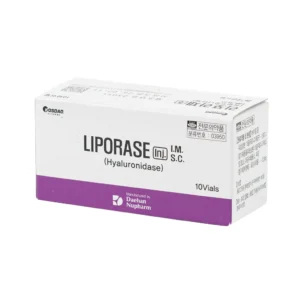
Professional Hyaluronidase: Global Wholesale Supply & Enzymatic Degradation Science
In advanced aesthetic medicine, the ability to manage complications and correct suboptimal filler placements is as critical as the initial procedure itself. As a specialized wholesale distributor of professional Hyaluronidase, we provide clinical practitioners and aesthetic networks with high-purity, pharmaceutical-grade enzymatic agents. Hyaluronidase is the definitive antidote to Hyaluronic Acid (HA) dermal filler complications, acting as an enzyme that catalyzes the degradation of HA by cleaving the internal glycosidic bonds.
Our commitment is to supply your practice with a stable, reliable, and authentic source of Hyaluronidase, ensuring your clinic is fully equipped to handle emergency interventions, correct asymmetries, and manage rare adverse events such as vascular occlusions or delayed inflammatory nodules.
The Science of Enzymatic Degradation
Hyaluronidase functions as a highly effective dispersing agent. Its clinical utility is defined by its ability to rapidly reorganize the dermal extracellular matrix by breaking down cross-linked HA.
-
Emergency Vascular Intervention: In the event of a suspected vascular compromise (e.g., filler-induced arterial occlusion), immediate administration of Hyaluronidase is the standard-of-care protocol. It acts to quickly clear the HA obstruction, restoring local blood flow and preventing tissue necrosis.
-
Correction of Contouring Deficits: It provides clinicians with a “safety net” for correcting over-filled areas, lumps, or asymmetries, allowing for the precise removal of excess product without requiring surgical intervention.
-
Management of Delayed Hypersensitivity: By removing the HA substrate, Hyaluronidase effectively halts the inflammatory stimulus, which is essential for managing persistent granulomatous reactions or late-onset nodules.
Professional Portfolio & Clinical Standards
We supply only the most rigorously tested formulations, sourced from global manufacturers known for their clinical consistency:
-
High-Purity Enzymatic Concentrations: We offer standardized international units (IU) per vial, ensuring predictable dosage and consistent degradation results.
-
Stability-Validated Formulations: We prioritize formulations with validated shelf-life and stability profiles, ensuring that the enzymatic activity remains potent when you need it most.
-
Standardized Logistics: Because enzymatic activity can be sensitive to environmental stressors, we maintain controlled-temperature supply chains, guaranteeing that the product’s efficacy is not compromised during transit.
The B2B Advantage: Integrity, Scalability, and Clinical Compliance
-
100% Guaranteed Authenticity: In an aesthetic market where emergency agents must be 100% reliable, we guarantee the provenance of our Hyaluronidase. Every vial features verifiable batch numbers, original security seals, and full documentation to ensure your practice remains compliant and patient-safe.
-
Logistical Preparedness: We provide a stable B2B supply, ensuring your clinic never experiences “stock-outs” of this mission-critical emergency product.
-
Clinical Scalability: Our tiered wholesale structures are designed to ensure that clinics of all sizes can afford to maintain an adequate supply of Hyaluronidase as a standard safety protocol, without compromising on quality or performance.
Frequently Asked Questions
Q: How quickly does Hyaluronidase begin to work after injection? A: Hyaluronidase typically begins its enzymatic action immediately upon contact with the HA. Clinicians often observe a significant reduction in volume within minutes, with the primary degradation process concluding within 24 to 48 hours.
Q: Does Hyaluronidase affect the body’s natural Hyaluronic Acid? A: While it is highly specific to the injected cross-linked HA, Hyaluronidase will also temporarily affect the body’s endogenous (natural) HA. However, the body rapidly replenishes its natural HA, and any systemic effects are typically transient and clinically negligible in the local injection area.
Q: Are there contraindications for the use of Hyaluronidase? A: Yes. The primary contraindication is a known hypersensitivity to the enzyme itself. Practitioners must always perform a patch test or ensure the patient’s medical history is thoroughly reviewed to rule out previous allergic reactions to bee stings or other hymenoptera venom, which may cross-react with certain sources of Hyaluronidase.
Q: Why is it necessary to keep Hyaluronidase in stock if my clinic performs filler treatments? A: Hyaluronidase is an essential safety requirement for any aesthetic practice offering HA dermal filler services. Having it readily available on-site is the clinical standard-of-care for managing vascular occlusions, where every second is vital for preventing permanent tissue damage.
Q: Can Hyaluronidase be used to correct permanent fillers or biostimulators? A: No. Hyaluronidase is strictly effective for the degradation of Hyaluronic Acid (HA) based fillers. It does not work on synthetic polymers like PLLA, CaHA, or PCL. These require entirely different management protocols.


