
Cytocare
Showing the single result
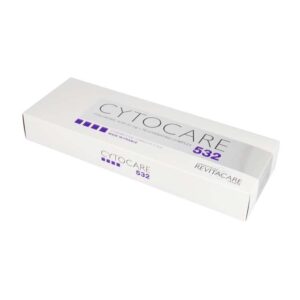
CYTOCARE Premium Mesotherapy Boosters: The Ultimate Guide to CT50 and Cellular Skin Rejuvenation
In the rapidly growing sector of non-surgical aesthetic medicine, the clinical focus has expanded beyond simple wrinkle filling to include proactive cellular skin rejuvenation. While traditional cross-linked dermal fillers are designed to occupy space and create localized structural volume, they do not address the biological aging of the surrounding skin cells. Over time, environmental pollution, chronic UV exposure, and natural chronological aging deplete the extracellular matrix, leaving the skin thin, dehydrated, dull, and prone to fine lines.
To address this widespread cellular decline and feed the skin from within, French biopharmaceutical specialist Laboratoires Revitacare engineered CYTOCARE. Holding prominent international health and safety certifications, Cytocare is an elite line of injectable skin boosters and mesotherapy cocktails. By combining specific concentrations of non-cross-linked hyaluronic acid with a patented, multi-component nutrient complex known as CT50, Cytocare delivers essential micronutrients directly to the dermal layer. This advanced formula reactivates dormant fibroblasts, repairs local tissue damage, and restores a luminous complexion.
For high-volume medical spas, dermatology centers, and international aesthetic product distributors looking to meet the global demand for natural skin radiance and deep hydration, Cytocare represents a vital inventory asset. Below, we break down the biochemistry of the CT50 renewing complex, detail the target indications for each product variant, outline clinical placement protocols, and analyze the commercial benefits of volume wholesale sourcing.
The Core Science: Non-Cross-Linked HA and the Patented CT50 Complex
The clinical success and deep skin-remodeling capacity of the Cytocare line depend on a precise synergistic blend of deep structural hydration and cellular nutrition:
-
High-Purity Non-Cross-Linked Hyaluronic Acid: Cytocare uses fluid, uncross-linked hyaluronic acid to act as a deep hydration vehicle. Instead of creating hard volume blocks, this fluid spreads out evenly across the dermal sheets, instantly binding water molecules to restore turgor pressure, smooth superficial dehydration lines, and create a supple tissue texture.
-
The Patented CT50 Rejuvenating Complex: Suspended directly within the fluid hyaluronic acid is Revitacare proprietary CT50 formula, which contains a specific blend of 50 active biological ingredients.
-
Essential Amino Acids: Includes structural building blocks like Proline, Lysine, and Glycine, which are absorbed by local fibroblasts to accelerate the synthesis of fresh, native Type I collagen and elastic fibers.
-
Comprehensive Vitamin Group: Features a robust blend of essential vitamins (including Vitamin B complex, C, A, and E) that drive cellular energy production, optimize local metabolism, and support tissue healing.
-
Synergistic Mineral Salts and Coenzymes: Provides vital trace elements needed to catalyze cellular division, speed up tissue remodeling, and support key intracellular enzyme pathways.
-
Direct Antioxidant Defense: The molecular components within the CT50 complex function as powerful free radical scavengers. They immediately neutralize reactive oxygen species (ROS) triggered by urban pollution and UV rays, shielding fragile cellular membranes and structural proteins from ongoing oxidative damage.
The Cytocare Product Portfolio: Target Concentration Calibration
The Cytocare family features three core injectable variations, each calibrated with a specific concentration of hyaluronic acid to match different patient age brackets, skin densities, and advanced photo-aging levels.
1. Cytocare 502 (Early Prevention and Glow)
-
Biochemical Profile: Features a delicate 2 mg concentration of non-cross-linked hyaluronic acid per vial, combined with the complete CT50 renewing matrix. Delivered in a box of 5 or 10 vials (5 mL each).
-
Target Patient Demographic: Ideal for younger demographics (ages 25 to 35) showing early signs of fatigue or skin dehydration.
-
Clinical Indications: Engineered to treat early superficial fine lines, correct a dull or uneven skin tone, maintain optimal moisture balance, and protect youthful skin from daily oxidative stress.
2. Cytocare 516 (Intermediate Repair and Hydration)
-
Biochemical Profile: Contains a medium-strength 16 mg concentration of high-purity hyaluronic acid per vial, combined with the complete CT50 renewing matrix. Delivered in a box of 5 or 10 vials (5 mL each).
-
Target Patient Demographic: Calibrated for intermediate skin repair, typically matching patients aged 35 to 50.
-
Clinical Indications: Designed to smooth out early expression lines, correct visible dehydration wrinkles, improve overall tissue elasticity, and restore structural density to the dermis.
3. Cytocare 532 (Advanced Regeneration and Firming)
-
Biochemical Profile: The most concentrated formulation within the core line, featuring 32 mg of high-purity hyaluronic acid per vial, infused with the complete CT50 renewing matrix. Delivered in a box of 5 or 10 vials (5 mL each).
-
Target Patient Demographic: Engineered for mature, thin, or heavily photo-damaged skin, typically targeting patients aged 50 and above.
-
Clinical Indications: Developed to treat advanced facial skin laxity, reduce deep dehydration creases, restore thickness to thinning skin, and provide an intensive anti-aging firming effect.
Clinical Placement Protocols and Delivery Methodologies
To safely achieve optimal dermal remodeling and uniform nutrient absorption, Cytocare must be delivered precisely into the superficial to mid-dermal layer using established clinical methods.
-
The Micro-Papular Mesotherapy Technique: Utilizing an ultra-fine 30G or 32G needle (typically 4 mm in length), tiny intradermal papules (0.01 mL to 0.03 mL per point) are placed uniformly across the targeted field, spaced approximately 0.5 cm to 1 cm apart. This method provides a steady release of nutrients directly to the fibroblast layers.
-
The Nappage Method: A rapid, superficial micro-injection technique where the practitioner delivers tiny droplets across the skin surface at a 45-degree angle. This approach is highly effective for covering broad fields like the cheeks or forehead quickly, creating a widespread luminous glow.
-
Electronic Injection Pen or Mesotherapy Gun: For high-volume medical spas, practitioners frequently deploy automated dermal delivery pens to ensure completely consistent injection depths, precise dosing per micro-puncture, and enhanced patient comfort.
-
Recommended Clinical Treatment Courses: Because cellular regeneration operates on a cumulative biological timeline, a single session is not sufficient. The standard clinical protocol demands an initial course of 3 to 4 treatments spaced 2 to 3 weeks apart, followed by a single maintenance session every 3 to 4 months to keep fibroblast activity at peak performance.
Technical Comparison: Cytocare vs. Alternative Skin Boosters
To assist medical procurement managers, clinic owners, and purchasing teams in organizing a balanced clinical menu, it is useful to evaluate how Cytocare compares with other market-leading skin boosters and bio-remodeling systems like Profhilo, Restylane Skinboosters, and NCTF 135 HA.
| Technical Parameter | CYTOCARE Range (Revitacare) | Profhilo (IBSA) | Restylane Vital (Galderma) | NCTF 135 HA (Fillmed) |
| Active Substance Base | Fluid HA + 50 Active Nutrient Ingredients | High and Low Molecular Weight Hybrid HA | Minimally Cross-Linked NASHA Hydro-Gel | Fluid HA + 55 Active Poly-Revitalizing Components |
| Primary Mechanism | Cellular nutrition and direct fibroblast feeding | Multi-level tissue bio-remodeling via HA diffusion | Hydro-lipidic water retention and superficial firming | Cellular nutrition and matrix repair stimulation |
| Immediate Volume | None (Focuses completely on skin quality) | Intermediate (Provides a sweeping hydro-lift) | Low (Provides a soft, local plumping effect) | None (Focuses completely on skin quality) |
| Downtime Profile | 12 to 36 hours (Small papules fade gradually) | Low (12 to 24 hours across 10 specific BAP points) | 24 to 48 hours (Minor pinpoint bruising) | 12 to 24 hours (Superficial papules absorb quickly) |
| Primary Target | Multi-level cell renewal and global radiance | Structural laxity and sagging facial lines | Targeted dermal lines and deep hydration | Broad skin quality and superficial radiance |
Key Takeaways for Clinical Sourcing Positioning:
-
Cytocare vs. Profhilo: Profhilo uses high concentrations of hybrid hyaluronic acid to rapidly spread across tissue layers, creating an intermediate hydro-lifting effect that treats skin laxity. However, it does not contain vitamins or amino acids to directly feed cell metabolism. Cytocare provides less initial structural lift but delivers superior direct cellular nutrition, making it highly effective for brightening dull skin tones, treating fine dehydration lines, and feeding tired tissue.
-
Cytocare vs. Restylane Vital: Restylane Vital utilizes cross-linked hydro-gel particles to hold water over several months, making it excellent for targeted structural hydration and plumping shallow surface lines. Cytocare operates as a fluid, comprehensive nutrient cocktail. Rather than simply binding water, it focuses on long-term skin health by providing the direct biochemical ingredients needed for natural collagen production.
Wholesale Sourcing, Storage, and Clinical Inventory Control
Because a full Cytocare skin-rejuvenation course requires multiple vials per patient spaced over several weeks, busy cosmetic centers experience rapid inventory turnover of their mesotherapy stock.
Sourcing the Cytocare range in volume through verified B2B e-commerce platforms provides clinics with significant tier pricing discounts. Minimizing your initial acquisition cost-per-box gives your practice the financial agility to bundle competitive multi-session treatment packages, combine skin-boosting with traditional dermal fillers, and protect your practice baseline profit margins.
When managing high-end aesthetic inventory online, strict logistics and storage guidelines must be enforced. Fluid hyaluronic acid and active vitamin complexes are sensitive to extreme temperature shifts. To preserve the structure of the liquid matrix, prevent the degradation of fragile vitamins, and ensure a smooth extrusion force during treatment, dry boxes must be stored in a cool, dry place, ideally at room temperature between 2 degrees and 25 degrees Celsius, away from direct sunlight, high humidity, or freezing conditions. Sourcing managers should purchase exclusively from authorized wholesale distributors who guarantee authentic original manufacturing from Laboratoires Revitacare, unadulterated batch tracking numbers, intact factory sterile security seals, and reliable shipping logistics.
Frequently Asked Questions (FAQs)
1. Is Cytocare a traditional dermal filler?
No, it is not. Traditional dermal fillers contain cross-linked hyaluronic acid gel designed to stay dense, lift deep tissue pockets, and physically occupy space to build artificial volume or change facial features. Cytocare is a fluid, non-cross-linked mesotherapy skin booster. It does not add volume; instead, it diffuses smoothly through the dermis to deliver intense surface moisture and feed cell networks to naturally improve skin quality from within.
2. What is the main clinical difference between Cytocare 516 and Cytocare 532?
The core difference lies in the concentration of hyaluronic acid. Cytocare 516 contains 16 mg of fluid hyaluronic acid and is calibrated to treat intermediate skin aging, fine wrinkles, and dehydration in moderate age brackets. Cytocare 532 features a highly concentrated 32 mg HA matrix, making it the ideal choice for mature or heavily sun-damaged skin that requires intensive tissue firming, deep hydration, and structural thickening.
3. Can Cytocare be injected on the same day as Botulinum Toxin or Dermal Fillers?
Yes, absolutely. Sourcing and combining these treatments is a highly effective approach to full-face rejuvenation. While dermal fillers restore deep structural volume losses and Botulinum Toxin relaxes underlying muscles to soften dynamic expression creases, Cytocare works independently to repair the biological health and surface glow of the skin itself. Medical professionals generally recommend performing the treatments in separate layers or waiting 2 weeks between sessions to allow the tissue to fully settle.
4. What is the typical post-treatment recovery profile for a patient?
Surface downtime is minimal. When using the classic micro-papular injection technique, patients will develop small, visible bumps at the puncture sites. These papules are a normal part of the process and typically resolve within 12 to 36 hours as the fluid gel absorbs completely into the surrounding dermis. Light pinpoint bruising, mild localized redness, and slight swelling may occur but can be easily covered with mineral makeup after 24 hours.
5. What facial and body zones can be treated with Cytocare?
Cytocare is highly versatile and can be applied across numerous anatomical fields prone to premature aging. Primary target areas include the full face, the delicate peri-oral margins, the neck, the broad decollete region, and the backs of the hands. It can also be safely applied across the inner arms or thighs to improve creping skin texture.
6. What are the absolute clinical contraindications for Cytocare?
Cytocare must never be administered to pregnant or breastfeeding women, individuals with a known hypersensitivity or systemic allergy to hyaluronic acid or any of the vitamins and amino acids in the CT50 complex, or patients presenting with active skin infections, herpes simplex outbreaks, or open wounds in the target zone. It is also completely contraindicated for individuals managing active systemic autoimmune disorders, bleeding conditions, or those undergoing current oncological therapies.
